
Web hosting might seem like an unlikely on-ramp to supercomputer administration, but it set Mark O'Shea on his way to running some of Australia's most powerful machines.
O'Shea is team leader for supercomputing operations and senior supercomputing systems administrator at Australia's Pawsey Supercomputing Research Centre.
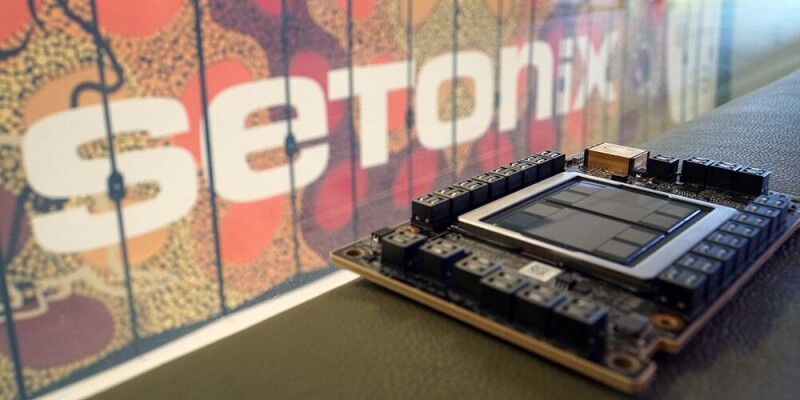
Pawsey is home to Setonix, an HPE Cray EX supercomputer with more than 200,000 AMD EPYC CPU cores and hundreds of AMD Instinct MI250X accelerators. Its GPU partition ranks 87th in the November TOP500 and 37th in the Green500, which measures computational performance per watt.
"Working in web hosting wasn't much different to what I was doing a few years later with supercomputers," O'Shea tells The Register. "Datacenters are essentially several thousand computers, as are supercomputers.
"So, we essentially had the same problems," he says, especially as regards cooling and power management.
There's no single formal route into supercomputer administration in Australia, O'Shea says. He picked up the necessary skills over time.
Andrew Underwood, Dell's chief technology officer for high-performance computing and artificial intelligence across the Asia-Pacific, Japan, and China, says that lack of formal training means some supercomputer admins start in academia.
He's observed that many HPC admins emerge from the sciences, catching the computing bug during their studies. A biologist working with a massive genomics database, for example, might discover a taste for running the systems behind it.
"The biologist might decide they want to be someone working in IT helping other biologists transform their industry," Underwood says.
"One of the things I really admire about people who work in the supercomputing field is they take it so seriously," Underwood adds. "It's almost a passion, a hobby, more so than it is a job."
"They want to play that real supporting and foundational role of assisting and engaging with scientists to help them use the technology to solve the problems the world faces."
O'Shea agrees, noting that many people who get into supercomputer admin are PhD graduates who stick around their universities after they graduate. Some of them gravitate toward running the departmental computers and then wind up in supercomputing.
"There are many roles around universities allowing people to be introduced to [supercomputer administration] while still doing enterprise-style or more departmental admin for researchers and system administration," O'Shea says.
Regardless of how a supercomputer admin gets their gig, both O'Shea and Underwood say the supersysadmin community is tight knit – which may not always be a good thing.
"As an industry in supercomputing, we need to be open to people from diverse backgrounds," Underwood says, "and we need to build these frameworks like the Student Cluster Competition, conferences like eResearch and the SC Conference, where students can get educated and systems admins get exposed to continual training."
Back at Pawsey, O'Shea notes that while the supercomputer systems admin job is interesting and challenging, there's one thing that always gives Setonix's admins a kick: seeing what scientists achieve with the machine.
One early highlight, O'Shea says, was producing a detailed image of a supernova remnant, crunching through a 43 TB dataset in the process.
"It's an exciting place to be. But everyone on my team really loves it when we hear what the researchers are doing with the supercomputers. It's very motivating when the guys get to see the end results." ®


